Automation of Production Planning and Scheduling
Integrated Order and Workforce Scheduling Using Heuristic and Optimisation Methods
As part of a Bachelor’s thesis at ZHAW School of Engineering, an integrated planning system for automated order and workforce scheduling was designed and developed. The objective was to enable consistent, transparent, and operationally feasible planning under conditions of high variability and fluctuating personnel availability, thereby addressing the limitations of traditional planning approaches in SMEs.
The system combines heuristic and optimisation-based methods from Operations Research with simulation-based evaluation and operational decision logic. This results in a high-performance and practical decision support system that accounts for both planning quality and operational feasibility.
Initial Context
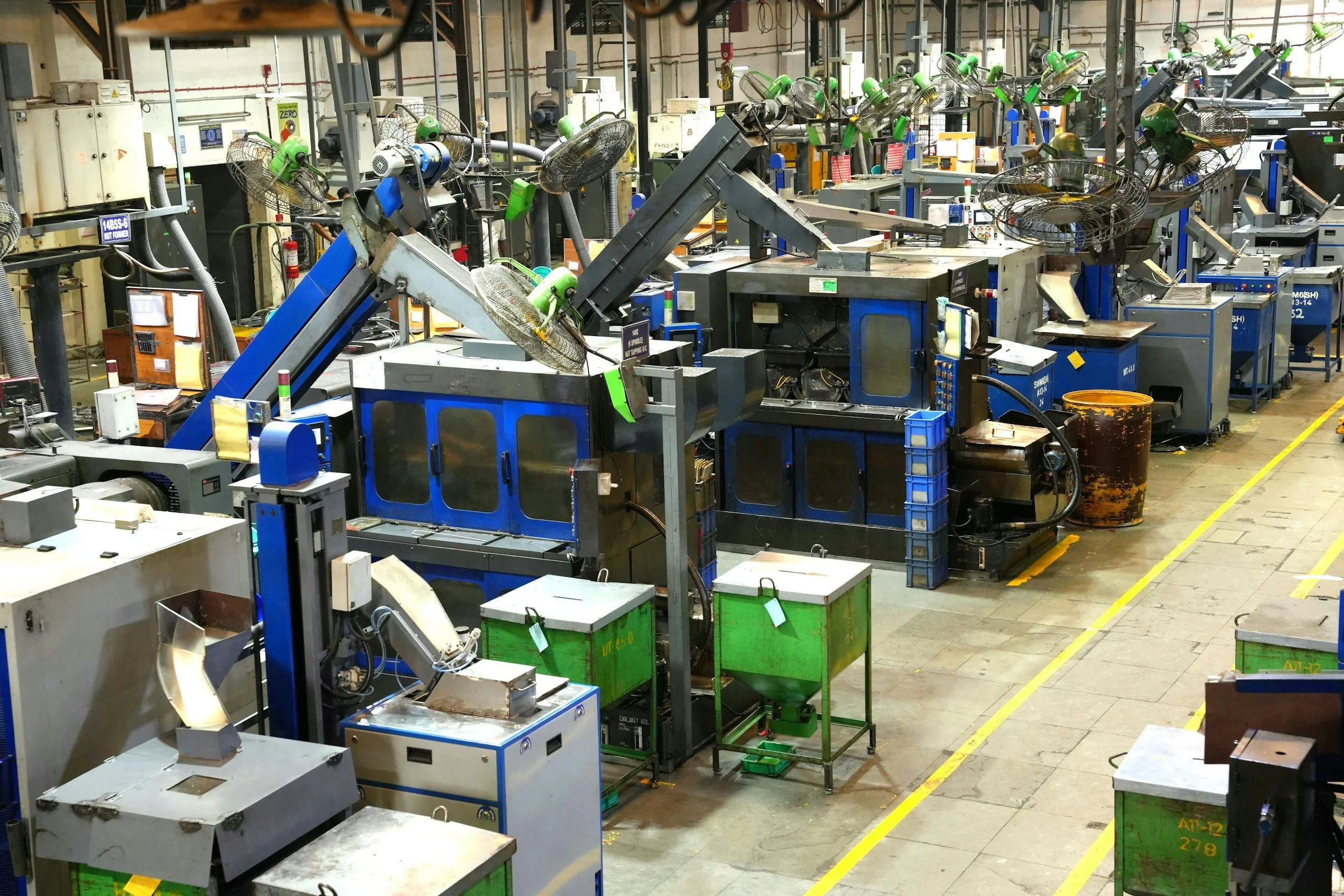
The work was based on empirical data from a sheet-metal processing SME in German-speaking Switzerland. The objective was to develop a planning concept that enables integrated order and workforce scheduling on this basis.
The underlying data foundation comprised three core elements:
Competency Matrix mapping employee qualifications
Attendance Profiles describing standard presence patterns
Work Plans defining processing times and the sequence of workstations per product
While competency matrices and attendance profiles can be created and maintained with relatively low effort, work plans were considered critical, as they form a prerequisite for operational production planning.
Attendance profiles were derived from employees’ contractual workloads and preferences and modelled with half-day granularity. This assumption was considered pragmatic and enabled a realistic representation of flexible working hours without unnecessarily increasing model complexity.
Additionally, historical order data was used exclusively for simulation and validation of the system. As the work was not conducted in direct collaboration with the data-providing company, the dataset was used to compare the developed concept with a hypothetical reference scenario under identical conditions.
Approach and Methods
-
At the outset, a targeted literature review on production planning was conducted, with a focus on order and workforce scheduling as well as relevant optimisation approaches in Operations Research. Existing methods were systematically categorised, establishing a solid understanding of heuristic and optimisation-based approaches.
Building on this foundation, the objective was defined as the development of a consistent planning concept for integrated order and workforce scheduling under typical SME conditions. The concept was designed to support dynamic adjustments, such as new orders and plan deviations, provide transparent planning results, and serve as a reliable decision-making basis in daily operations.
Beyond conceptual design, the developed concept was implemented as a prototype planning system and validated within a simulation-based environment.
Specifically, the system was designed to determine reliable delivery dates for newly arriving orders through simulation-based planning, using automatically generated, near real-time order and workforce schedules.
-
The concept development phase was driven by an open and exploratory search for a suitable approach to integrated order and workforce scheduling under real-time conditions. Although the target vision was clearly defined, existing concepts from literature and practice could not be directly applied to the specific use case.
An obvious approach was to formulate an optimisation model that simultaneously solves order and workforce scheduling. However, due to the high combinatorial complexity of the overall problem, this approach proved impractical for operational use, where short response times are required. Heuristic methods appeared more suitable; however, no suitable approach was identified that enabled a consistent integration of order and workforce scheduling in a single step.
Against this background, a solution principle was developed iteratively, combining the strengths of both approaches. The core idea was to heuristically generate integrated order and workforce schedules and subsequently refine them through optimisation. This concept formed the foundation for the subsequent methodological and technical development of the planning system.
-
The developed planning concept was implemented as a prototype in Python and embedded in a simulation-based environment. The objective was to validate the conceptual assumptions and to model the interaction between order and workforce scheduling under realistic operating conditions.
The simulation represented the production process as a dynamic system in which orders flow through workstations under constrained personnel resources. This enabled a systematic analysis of the current order situation, capacity bottlenecks in personnel and workstations, and key performance indicators such as cycle time, work in progress, and throughput.
-
The performance of the planning system was assessed using multiple metrics and compared with a naive reference scenario representing typical, deliberately simplified SME planning practices. Both scenarios were based on identical order and resource structures and differed only in the applied planning and control logic.
The evaluation was conducted through simulation-based experiments, statistical analyses, and graphical assessments. The results indicated consistent improvements over the reference scenario and supported the effectiveness of the developed concept.

Solution Concept
The developed solution concept defines the core logic of the planning system and the mechanisms through which order and workforce scheduling can be implemented in a consistent, dynamic, and practical manner. Rather than focusing on individual algorithms, the concept emphasises the interaction between planning, simulation, and adaptability in an operational context. The following sections outline the key conceptual building blocks that enable the system to deliver robust and implementable planning outcomes under realistic SME conditions.
-
At the core of the solution concept is the simultaneous generation of order and workforce schedules. Rather than being created sequentially, both planning levels are produced within the same heuristic and form two inseparable dimensions of a single planning process. This ensures that every generated order plan is feasible in terms of personnel from the outset.
In contrast to conventional approaches, where workforce scheduling is performed downstream or as a corrective step, this concept incorporates qualifications, availability, and operational constraints directly during plan generation. Critical conditions are therefore not evaluated retrospectively but are embedded in the planning logic itself. This prevents inconsistent or infeasible planning outcomes.
Building on this consistent baseline, workforce schedules can be further refined without altering the underlying order sequence. The integrated planning approach thus provides a stable and robust foundation for operational decision-making, simulation-based delivery date estimation, and the transparent assessment of capacity and utilisation.
-
The solution concept follows a rolling planning approach that is continuously updated. It distinguishes between a fixed planning horizon and a flexible, dynamic planning component.
The fixed planning horizon ensures operational reliability. Within this period, order and personnel schedules are defined in a binding manner, forming the basis for communicating attendance times and executing operations. Changes within this horizon are only considered in exceptional cases.
The flexible planning component follows the fixed horizon and represents the future order and personnel situation. It remains deliberately adaptable and responds dynamically to new orders, changing conditions, and planning deviations. This enables the system to continuously generate a consistent overall plan without compromising operational stability.
This separation allows short-term commitment and long-term adaptability to be combined. The planning system remains aligned with day-to-day operations even under highly dynamic conditions, while simultaneously enabling a forward-looking assessment of future developments.
-
New orders are not considered in isolation but are always evaluated in the context of the current and anticipated order and personnel situation. The objective is to realistically assess the impact of an additional order on delivery dates, capacities, and utilisation before it is committed to the operational plan.
To this end, the existing plan serves as a baseline and is extended by the new order. The resulting order and personnel schedule is then simulated, making the temporal effects across the entire production system visible. This enables reliable delivery dates to be determined without jeopardising existing orders or planning commitments.
This mechanism enables a dynamic evaluation of new orders while maintaining planning stability. New orders are integrated into the operational plan in a way that ensures feasibility within the existing capacity and personnel structure.
Through the simulation-based integration of new orders, the planning system evolves into an operational decision-support tool. It not only represents existing processes but also actively supports quotation and prioritisation decisions.
-
The solution concept is designed to respond dynamically to changes in the operational environment. New orders, planning deviations, or changes in personnel availability trigger a consistent planning mechanism that continuously updates order and workforce planning.
The planning process is automated and requires minimal computational time, enabling adjustments in near real time. This is particularly relevant for operational decision-making contexts where rapid responses are required, such as when scheduling new orders or addressing unforeseen deviations in the production sequence.
Through the consistent use of heuristic methods combined with targeted optimisation, the system remains stable and performant even under frequent plan modifications. This ensures that planning outcomes are not only computationally consistent but also robust and practically usable in day-to-day operations.
Outcome and Impact
An automation concept to reduce manual planning effort and improve planning quality and schedule adherence
The performance of the developed planning system was systematically evaluated through simulation-based experiments. A hypothetical reference scenario served as a benchmark, representing deliberately simplified planning practices typical of SMEs and differing from the developed concept solely in its planning and control logic.
Under identical order and resource conditions, the results clearly demonstrate the operational and structural benefits of the developed planning system.
-
Every generated order plan is personnel-feasible from the outset
No downstream corrections or conflicts between order planning and workforce scheduling
Avoidance of unsolvable planning situations already during plan generation
Added Value – High planning stability and operational reliability with minimal manual intervention.
-
Committed workforce scheduling over a defined planning horizon
Simultaneous representation of future order and personnel situations
Clear distinction between binding commitments and flexible adaptation
Added Value – Planning provides reliability for employees while preserving organisational flexibility.
-
New orders are evaluated in the context of the existing order and capacity situation
Delivery dates are derived from simulation-based comprehensive planning rather than static assumptions
Existing orders and operational commitments are not jeopardised
Added Value – Well-founded quotation and prioritisation decisions without unrealistic delivery date commitments.
-
Near real-time updates for new orders and plan deviations
A unified planning mechanism for all types of changes
Stable planning even under frequent adjustments
Added Value – The planning system remains usable and performs reliably even under operational pressure.
-
Compared to a hypothetical reference scenario with identical order, resource, and production structures, the following effects were observed:
Significantly improved schedule adherence
Reduced cycle time and work in progress with constant throughput
Improved average employee utilisation
Statistically significant effects in simulation-based experiments
Added Value – Measurable improvements in key production metrics under identical structural conditions.
The results demonstrate that robust and practical planning solutions can be developed through a combination of consistent heuristic planning, targeted optimisation, and simulation-based evaluation.
The developed concept is particularly suitable for SMEs in which high operational dynamics, variable personnel availability, and real-time requirements push traditional planning approaches to their limits.
This case study illustrates how consistent and reliable decision-making foundations can be created through rigorous modelling, appropriate abstraction, and systematic validation, while remaining applicable in realistic operational conditions.